This was the biggest single-day fall for the benchmark index since August 10 when it had fallen by 310 points.
Domestic market is losing its trend to rate sensitive stocks post the announcement of the new RBI governor who is likely to maintain a cautious stance on interest rate cut

Geo-political concerns over death of a Saudi journalist, Brexit and likely breach in Italy's budget also kept investors cautious.
Financials were the top gainers lead by private lenders ICICI Bank and HDFC Bank
The 50-issue Nifty fell 29.60 points or 0.34 per cent to close at 8,642.55

Sectoral performance was mixed with media and PSU banking stocks attracting buyer interest and healthcare, FMCG and metal stocks bearing the brunt of the bears
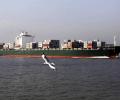
Colombo can handle more container traffic than all of India's ports put together. For a country with a long maritime tradition, this is a pathetic state of affairs, saya T N Ninan.

Combined debt-equity ratio of top companies declines but interest expenses outgrow profits.

The sentiment got support from better-than-expected earning results by select companies and continuous buying by domestic financial institutions.

Textile and telecom shares have gained ahead of the Cabinet meet later today which is likely to announce new measures for both the sectors.

Ajit Mishra, vice president, Research, Religare Broking, answers your queries.

The broader NSE Nifty too reclaimed the key 11,500-mark. It touched a high of 11,562.25, before finally settling at 11,536.90, showing a gain of 59.95 points, or 0.52 per cent.
The Sensex has now lost 878.32 points in six sessions -- its longest string of losses in six months.

Heaping praises on Gujarat Chief Minister Narendra Modi's leadership for not only driving industrial growth but also boosting rural development, Ratan Tata on Wednesday said the Tata Group will partner the state in providing transportation into the hinterlands.
For a direct indication of the premium attached to efficiently-run ports in India, one need look no further than the recent stock market listing of Mundra Port and Special Economic Zone.

The 50-share NSE Nifty was trading lower by 24 points.
The BSE Sensex was down 326 points at 23,277 and the Nifty was down 107 points at 7,056.
